
Main Overview & Mission
The Security Department is dedicated to safeguarding university assets, personnel, students, and confidential information from theft, espionage, sabotage, subversion, terrorism, and any security threats to the university's interests 24 hours a day. Operating under Civil State Agency Security Standards, the department implements effective threat prevention and damage mitigation measures.
The department also oversees campus traffic management to ensure smooth, safe, and orderly transportation. It enforces traffic laws, university rules, and related announcements, while managing traffic accident responses and official security policies.
In addition, the Security Department provides voluntary and emergency support to the Pattani Campus community 24/7. This includes medical emergency assistance, general emergency response, and disaster prevention/relief (fire, windstorm, flood, epidemic, and other natural or human-made hazards) to protect the lives and well-being of staff, students, campus residents, visitors, and the public.
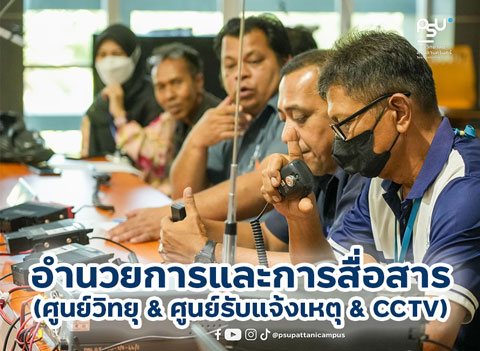
Administration and Communications Unit
- Security Planning: Analyze risks and formulate security plans in compliance with Civil State Agency Security Standards.
- Technology Integration: Design and implement security technology solutions to support operations.
- Communications Center Management: Manage the central communications hub for emergency reporting via radio, phone, and designated channels, and coordinate with internal and external agencies.
- Telecommunications & Frequency Control: Control telecommunications radio stations and frequencies in accordance with regulations for security coordination, public order, medical operations, disaster relief, and special events.
- CCTV Surveillance Operations: Operate the CCTV Control Center 24/7 for continuous surveillance, risk monitoring, incident prevention, and evidentiary support.
- Intelligence & Investigation: Collect and analyze security intelligence, monitor threat indicators, and process data for assigned legal or case-specific investigations.
- Data & Information Systems: Record, analyze, and process safety incident data to maintain effective information systems.
- Airspace & Field Work Authorization: Audit and log operations involving Unmanned Aerial Vehicles (UAVs/drones), utility pole cable installations, construction, repairs, modifications, and public utility access.
- Procurement & Maintenance: Manage procurement, disbursement, and preventive maintenance to keep all safety and communications equipment in operational readiness.
- Training & Disaster Drills: Conduct synthesized frequency radio training, execute emergency communication drills, and lead disaster management simulations.
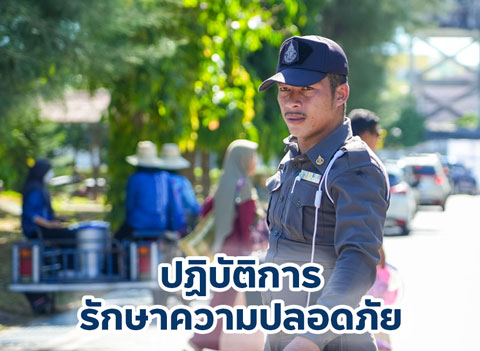
Security Operations Unit
- Workforce Deployment: Manage security personnel staffing levels under Civil State Agency Security Standards to prevent threats and mitigate risks effectively.
- Fixed Post & Access Control: Station personnel 24/7 at fixed posts within controlled and restricted areas, including screening individuals and vehicles entering and exiting campus.
- Mobile Patrols & Rapid Response: Deploy mobile patrol units for continuous campus inspection and rapid incident response.
- 24/7 Emergency Assistance: Provide 24-hour medical emergency response, disaster relief, and situational assistance upon request.
- Traffic Operations Support: Assist the Traffic Unit in controlling vehicle flow to ensure safe and orderly transit.
- Special Event Security: Organize dedicated security task forces for campus events and university functions held off-campus.
- Law Enforcement Support: Assist law enforcement officers in tracking and apprehending offenders.
- General Operations: Carry out additional security operations assigned within the scope of security personnel authority.
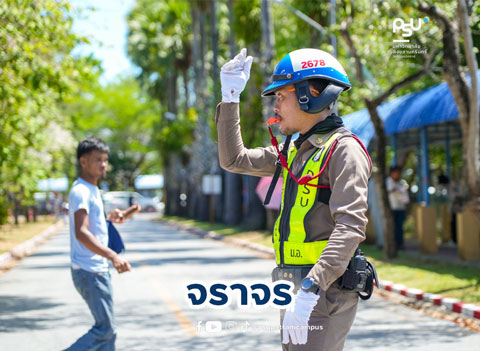
Traffic Unit
- Campus Traffic Management: Manage overall campus traffic flow for safety, orderliness, and efficiency.
- Manual Traffic Control & Guidance: Direct traffic using hand signals at high-risk locations, rush hours, or congested periods, while providing directional assistance to motorists.
- Traffic Discipline & Awareness: Enforce traffic regulations and run awareness campaigns to promote compliance across campus.
- Signage Maintenance: Inspect and maintain campus traffic signs and road markings to ensure high visibility and operational condition.
- Accident Investigation & Reporting: Perform initial site inspections during campus traffic accidents, compile legally compliant incident records, and prepare summary reports.
- Traffic Statistics & Data Analysis: Collect, analyze, and maintain traffic statistics and campus transit trends.
- Working-Hours Emergency Support: Inspect and assist with emergency situations and public relief requests during official working hours.
- Security Operations Assistance: Support general security officers in inspections, tracking, and offender apprehensions as designated assistant peace officers.